Stitching the Story: Capturing Heart and Resilience through the Story Cloth | A LAB^4 group exhibition | Arts + Literature Laboratory | Madison Contemporary Arts Center

Stitching the Story: Capturing Heart and Resilience through the Story Cloth | A LAB^4 group exhibition

Arts + Literature Laboratory presents Stitching the Story: Capturing Heart and Resilience through the Story Cloth, a group exhibition organized by the community curation project, LAB^4, in partnership with the Southeast Asian Healing Center, on display from Tuesday, July 8, 2025, through Friday, August 29, 2025

A reception for all current exhibitions will be held on Thursday, July 17, from 6:00pm to 8:00pm.

Stitching the Story is a powerful exhibition celebrating the artistry, resilience, and lived experience of local Hmong artists. Rooted in the traditional textile art of paj ntaub, the featured works reflect stories of survival, displacement, healing, and cultural pride. Many of the pieces were created during times of great personal and collective hardship, spanning from refugee camps to resettlement in Wisconsin. Others were stitched in moments of reflection, drawing from memory, landscape, and the rhythms of daily life.

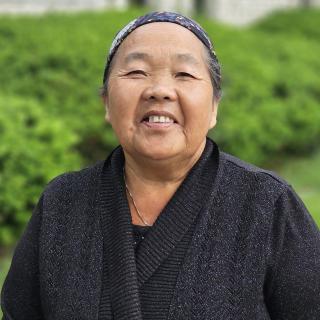
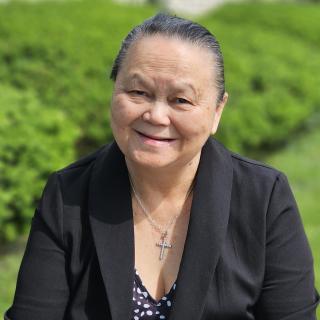
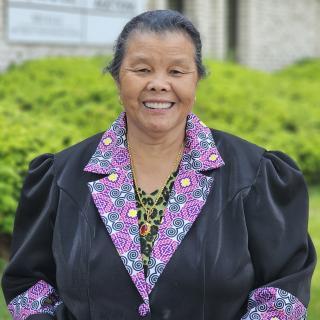
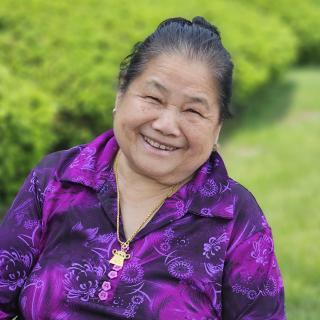
The exhibition highlights the work of eight Madison-based artists – Chang Lee, Lou Vang, Mai Vang, See Vang, Kia Yang, See Yang, Thao Yang, and Kong Xiong – whose embroidery bridges generations and geographies. Through detailed motifs, cross-stitching, appliqué, these works preserve a cultural legacy while embracing adaptation and change. In sharing their work, the artists offer a vibrant testament to creativity as a form of storytelling, healing, and connection. Visitors are invited to learn from their techniques, honor their histories, and celebrate the enduring beauty and strength of the Hmong community. 
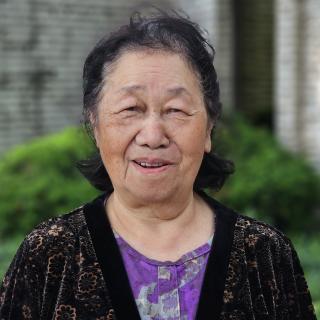
Chang Lee

Chang Lee was born in the summer of 1953 to Ge Yang and Chia Vue Lee, and she grew up in Xayaboury, Laos. Not long after marrying her late husband, Nor Soua Yang, Chang fled persecution and escaped first to Ban Nam Yao and later to the Ban Vinai refugee camp. There, she spent over half a decade creating Paj Ntaub as a way to earn a living and support her family.

Eventually, Chang resettled in Madison, Wisconsin with her husband and children. She now lives with her son, where she enjoys gardening and visiting the Southeast Asian Healing Center.

Chang continues to create Paj Ntaub, which helps her pass the time and heal from the trauma of the Secret War. For Chang, a perfect day includes working in her garden and settling in at home with a Paj Ntaub project to embroider. 

Lou Vang

Born in Laos, Lou Vang’s life was shaped by loss and resilience from the very beginning—her mother passed away when she was just 8 months old. Raised by her father, Cia Kue Vang, she grew up during a time of conflict and uncertainty. At 18, she fled to Thailand to escape persecution, carrying only a few belongings—and even a chicken—as she made the dangerous journey.

Lou later met and married her husband, and together they built a family. Her talent in paj ntaub, traditional Hmong embroidery, became both an art and a way to support her children. She created stunning story cloths and cross-stitch pieces, including state-themed textiles, which she sold to Americans.

On March 3, 2005, she arrived in the U.S. with her 10 children as part of the last wave of Hmong refugees. They settled in Madison, Wisconsin, where she continued her craft and began a new life.

Today, Lou still gardens and creates paj ntaub, though not as much as she once did. Her... Read More

Mai Vang

Born in the mountainous region of Xieng Kouang, Laos, Mai Vang grew up surrounded by war and resilience. Her mother, Yer Yang, worked tirelessly on the farm while raising the family, and her father, Nka Ze Vang, served as a soldier during a time of great conflict.

During the Secret War, at just 25 years old, she and her family fled to Thailand in search of safety. They found temporary refuge at Ban Vinai Refugee Camp, where life was uncertain but filled with hope. It was there that she raised her children while waiting for a better future.

In August 1984, she arrived in the United States, sponsored by a church that helped her family begin a new chapter in California. After three years, they eventually settled in Madison, Wisconsin, where she has built a quiet life surrounded by her children and grandchildren. Now living with her son, daughter--in-law,  and grandkids, she finds peace in simple joys. One of her greatest passions is creating paj ntaub.... Read More

See Vang

See Vang was born in the summer of 1949 to Pa See Vang and Yia Vue, and she grew up in Xieng Khouang, Laos. During the Secret War, she and her family fled to the Ban Vinai refugee camp. For ten years, See worked with Camacrafts, creating and selling Paj Ntaub and story cloths to Americans overseas to support her family. It was during this time that she developed her expertise and deep love for Hmong embroidery.

On March 16, 1992, See resettled in Madison, Wisconsin with her husband and six children. She now lives a fulfilling life in Mt. Horeb with her son, daughter-in-law, and two grandsons.

Today, See continues to enjoy making Paj Ntaub, as it brings her happiness and helps ease her stress and worries. In her free time, she enjoys taking long morning walks, gardening, and visiting the Southeast Asian Healing Center to spend time with friends and family.

Kia Yang

Born during the wet season on October 15, 1961, Kia Yang grew up in Nam Seua, Laos. Her father, Chongtoua Yang, was a soldier, and her mother, Mee Vang, worked hard farming and raising their children. Much of her early life was spent escaping persecution during the Secret War. 

She sought refuge in Thailand, but when the Ban Vinai Refugee Camp closed, she had no choice but to return to Laos. Despite these challenges, she remained hopeful and resilient. In 2016, she finally found a permanent home in Madison, Wisconsin, sponsored by her son-in-law. Reuniting with her family brought her peace and happiness.

Now living with her loved ones, she enjoys a quiet and fulfilling life. She regularly visits the center, where she connects with peers and finds joy in shared experiences. A dedicated artist, she works on paj ntaub every day. She also finds happiness in gardening and spending time with her grandchildren. She takes pride in staying active and keeping... Read More

See Yang

Born in the spring of 1943, See Yang was raised by her mother’s family after the loss of her father. In 1972, she met her husband, and by 1975, with a young child in her arms, she fled to Thailand to escape persecution. With no money and little food, she used her skills in paj ntaub to help support her family, where she would create large, detailed pieces that told the story of her people, survival, and hope.

In 2005, with help from her late husband’s brother, See and her children resettled in the United States. After a short time in Chicago, she moved to Madison, Wisconsin, where she found support and community at the Southeast Asian Healing Center, then called Kajsiab House, and received support in getting citizenship and access to benefits. 

Though age and fading vision have made it hard for her to sew, she continues to find peace in gardening—especially growing Hmong cucumbers and corn—and watching gardening videos. Once a female soldier... Read More

Thao Yang

Thao Yang was born in the summer of 1976 to Wa Pao Vang and Sia Vang. At a young age, she fled to Ban Vinai Refugee Camp to escape persecution from the Communist Vietnamese forces. She lived there until 1991, helping her mother sew and sell paj ntaub, where she developed a deep skill in Hmong embroidery.

In 1997, Thao arrived in the United States and eventually made her home in Madison, Wisconsin. There, she built a new life with her husband and children, surrounded by community and opportunity.

Though she doesn’t embroider as often now, Thao continues to live with grace and intention. She enjoys gardening and regularly attends the Southeast Asian Healing Center, where she finds joy, connection, and relaxation among friends.

Her life is a reflection of quiet strength, cultural pride, and resilience. Through every chapter—from Ban Vinai to Madison—Thao has remained deeply rooted in her heritage while embracing the beauty of a simple,... Read More

Kong Xiong

Kong Xiong was born in spring 1950 in Xam Neua, Laos, to Sai Nue Xiong and Mee Yang. Her father was a village leader, and her mother cared for their family and farmed. After surviving the Secret War, Kong fled with her husband and two children to Thailand, living in Nong Khai and later Ban Vinai refugee camp.

In 1991, Kong and her family resettled in Philadelphia before moving to Madison, Wisconsin, where she now lives with her daughter. Kong finds healing through paj ntaub, a traditional Hmong textile art that helps her manage stress and practice mindfulness. She likes to attend the Southeast Asian Healing Center, where she receives support from staff and her peers while learning new skills like sewing and quilting. The program has helped her connect with vital resources, travel, and build a life of creativity and community in the U.S.

LAB^4 community curatorial projects are made possible by a grant from the Ruth Foundation for the Arts.

PLAN YOUR VISIT

Arts + Literature Laboratory is located at 111 S. Livingston Street #100, Madison, Wisconsin, 53703.

Our galleries are open Tuesday through Friday 10am-5pm and Saturday noon to 5pm, and other programs take place throughout the week. Please check the events calendar and education section for details.

CALENDAR

Sign Up For Our Newsletter

Stay up to date on upcoming programs and opportunities through our monthly newsletter.